SOLUTIONS · Higher education
Universities and research institutes
Reproducible multimodal data and verification reports for grant proposals, publications and corpus building, covering experiment design, collection, annotation and quality assurance.
Audience
Linguistics / psychology / education / medicine
- Related services
- 3 modules
- Related data
- 3 directions
- From plan to first delivery
- 12 weeks
- Median annotator agreement
- 0.91
- Median cross-stream sync error
- 1.4 ms
- Batch QA pass rate
- 98.7%
01 / Challenges
Universities and research institutes: the data problems we see
These problems rarely come from a single stage. They sit in the gaps between design, collection, annotation and verification.
Batches cannot be merged
Samples, devices and protocols drift between waves, so data from one study cannot be analyzed together, and reviewers cannot reproduce it.
Ethics and data management lag
Consent, de-identification and retention are often completed after collection ends, which produces both rework and compliance risk.
Agreement cannot be demonstrated
Without annotator training and double-blind review records, κ values cannot be traced and the credibility of conclusions weakens.
Each modality keeps its own clock
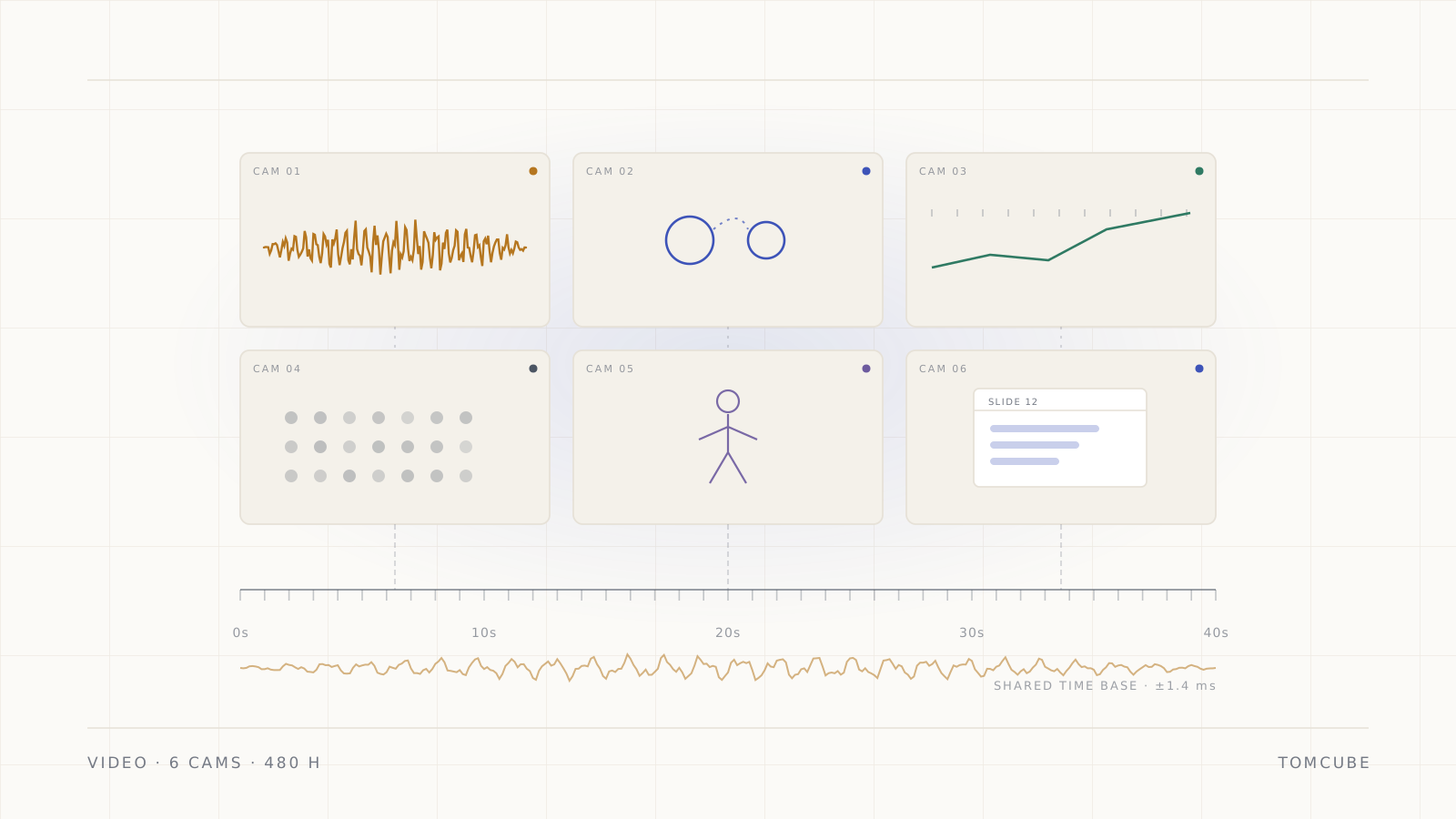
Audio, video and eye-tracking devices record independently, timelines do not line up, and cross-modal analysis stops at broad description.
02 / Approach
How we move forward
Every project follows the same order: write the question and specification clearly, then move into collection, annotation and verification.
- 01
Design before collection
Settle variables, coding manual and statistical plan with the research team, and write the data specification before entering the field.
- 02
Ethics and licensing first
Complete consent, data management plan and de-identification rules before collection to avoid late rework.
- 03
One time base and metadata
All streams share one clock and naming convention, with session logs, device parameters and version records delivered alongside the data.
- 04
Verification report with the data
Sync error, signal-to-noise ratio and annotation agreement go into the report, supporting methods sections and appendices.
03 / Delivery
What you will receive
- Citable data description and methods material
- Ethics review and data management plan support
- Reproducible analysis scripts, metadata and session logs
- Annotation agreement report with documented double-blind review
The real constraints in a research setting
Data problems in university projects rarely come from the equipment. They come from the process: recruitment criteria shift between waves, device firmware is updated mid-study, annotators leave. Any of these makes one study’s earlier and later batches hard to merge. We usually begin with a data check-up, confirming the timeline, sampling rates and licensing scope of what already exists, and then decide whether to top up, re-collect or redesign. The check-up is deliberately short: a week of inspection is usually enough to know whether the existing data can be pooled, and it prevents months of analysis on data that will never be comparable.
From proposal language to data specification
A grant proposal’s “multimodal corpus” has to be broken into executable specifications: which variables must be synchronized, the sampling rate for each modality, the annotation hierarchy and coding manual, the expected sample size and statistical power. The research team and our data engineers confirm this together and produce a reviewable data plan, so nobody discovers at the end that age, dialect background or stimulus order was never recorded. The specification also makes the sample size defensible: if the plan says 40 speakers per group, the recruitment target, the collection weeks and the budget all follow from that number instead of being negotiated at the end.
Delivery and reuse
Each batch delivers raw data, aligned working files, annotation results and a QC report. The report records sync error, signal-to-noise ratio, annotation agreement, sampling ratio and exceptions; the metadata records devices, environments, participants and licensing. At review, defense or journal revision these materials support the methods and limitations sections directly, and let later researchers reproduce the same processing chain.
Where a study involves children, patients or identifiable imagery, ethics and de-identification are completed before collection, not patched afterwards. Smaller groups can buy validation and annotation services only, and reuse data they already have.
Typical collaborations
The labs we work with repeatedly include C9 university speech labs, multimodal labs at language universities, immersive-audio perception labs, conservatory multimodal labs, and language science and neuroscience groups. Settings differ; the method does not: settle the research question and variables, design synchronized collection, annotation schema and verification criteria, then deliver citable, reproducible data and reports. For teams preparing a grant, we can also produce a short feasibility note describing the collection setup, the likely ethics timeline and the delivery milestones, for inclusion in the application.
04 / Cases
Illustrative cases
The cases below come from de-identified project settings and are used only to show how we collaborate and what delivery looks like.
Dialect prosody study
IllustrativeCollected 260 hours of speech across three dialect sites for a university linguistics team, with phonological and prosodic boundary annotation.
260 h
Classroom interaction study
IllustrativeCompleted multimodal capture and verbatim transcription of 48 lessons for a normal university education team, supporting teacher-student interaction analysis.
48 lessons
05 / Related capabilities
Services and data that go with it
A solution is usually delivered as a combination of services; related datasets can support evaluation, annotation or method verification directly.
Related datasets
Data catalog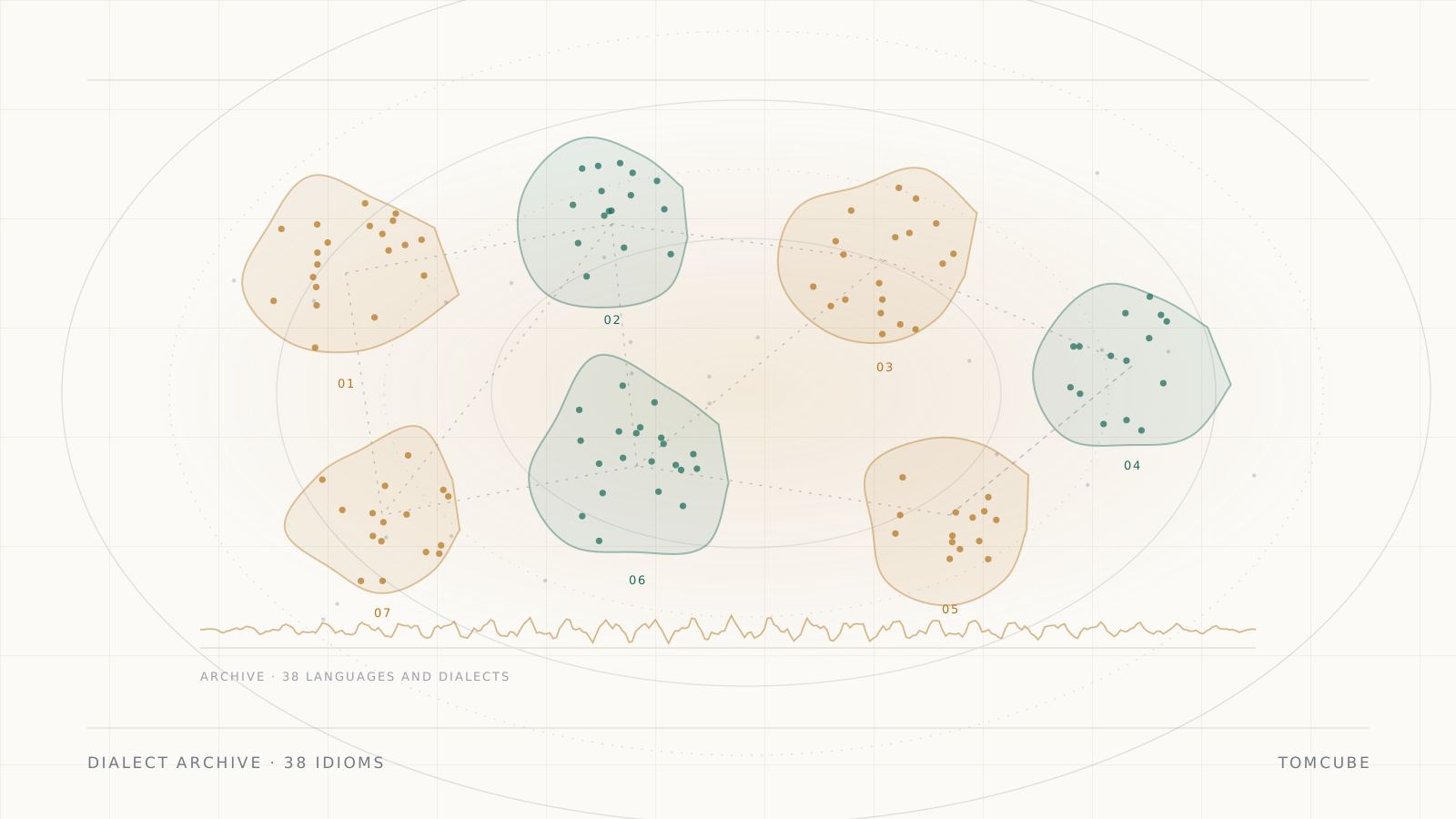
06 / FAQ
Common questions
Frequent questions about timeline, licensing and how we collaborate.
Can you work to national grant application timelines?
Yes. We provide pre-collection feasibility notes and can schedule delivery milestones backwards from the submission date.
Can existing data get supplementary annotation and validation?
Yes. We run a data check-up first, assessing time base, signal-to-noise ratio and licensing scope, then define the annotation plan.
Can the data be published or included as a paper appendix?
It depends on the consent and licensing terms. At project start we separate three scopes: publicly shareable, academic use only, and internal use only.
How is licensing managed in cross-institution collaborations?
Each participating institution signs a separate data use agreement, and the licensing scope and validity period are recorded in the metadata.
Start a project
Start with a data check-up
Tell us the question you need to answer, the data you already have and your time constraints. We will come back with an executable plan outline and budget range.
Reply within one business day · NDA and data licensing supported · Dedicated academic track