LAB · FIELD · REMOTE
Multimodal data collection
From lab-grade multi-stream capture to field, home and remote settings, we design the collection plan around the research question, then handle recruitment, consent and on-site quality control.
Deliverables
- Collection plan, variable list and equipment roster
- Participant recruitment materials and consent documents
- Synchronized multi-stream raw data and backups
- Session logs, field notes and QC checklists
- Service module
- 01 / 05
- Deliverables
- 4 items
- Process stages
- 4 steps
- Quality verification
- Batch-level
01 / Service scope
What we actually do
Each capability can be switched on as a standalone module or combined into a full delivery chain.
Lab multi-stream sync
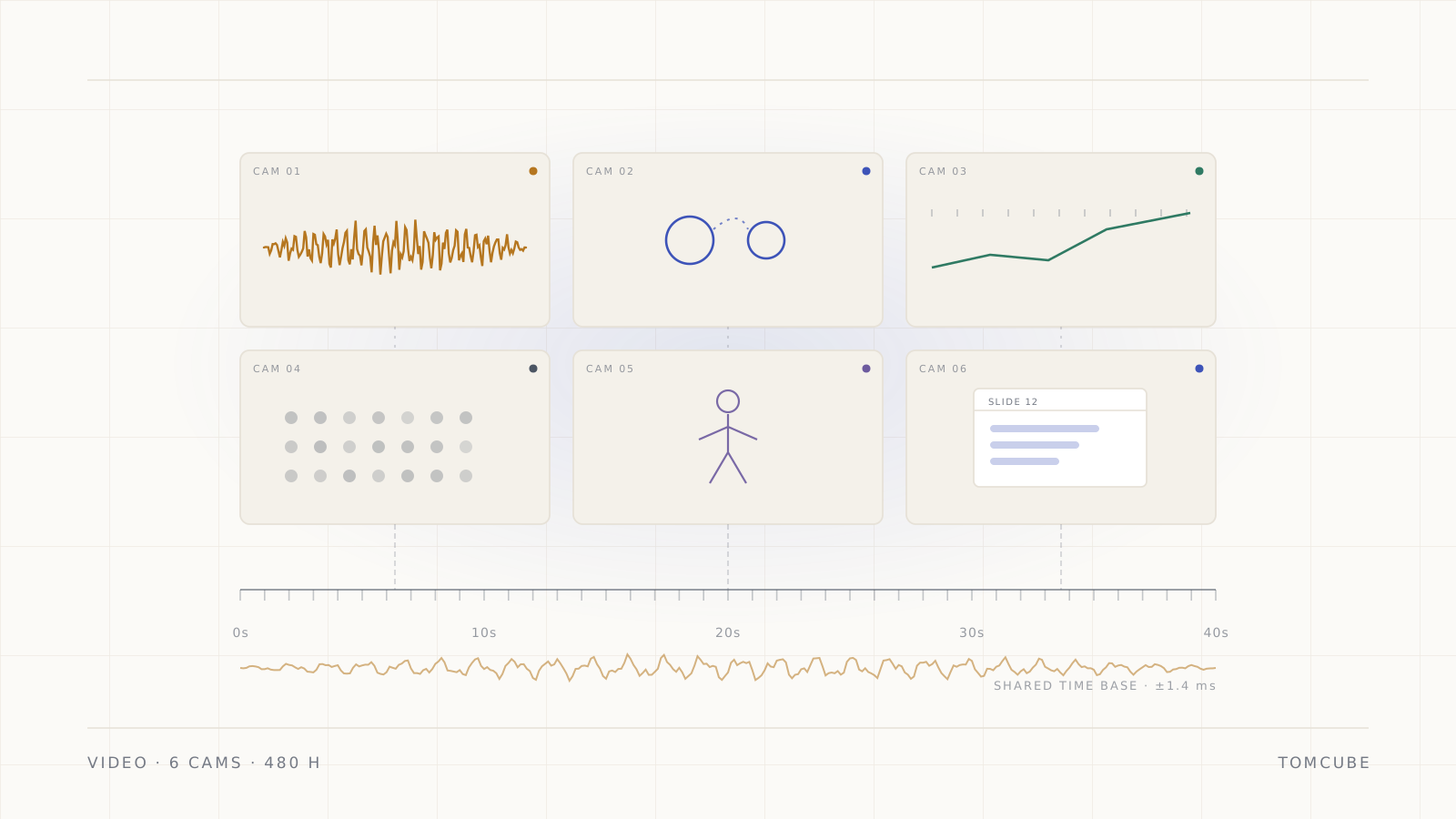
Audio, video, eye tracking, physiology and motion capture share one time base and are aligned from the first frame.
Field and real-world settings
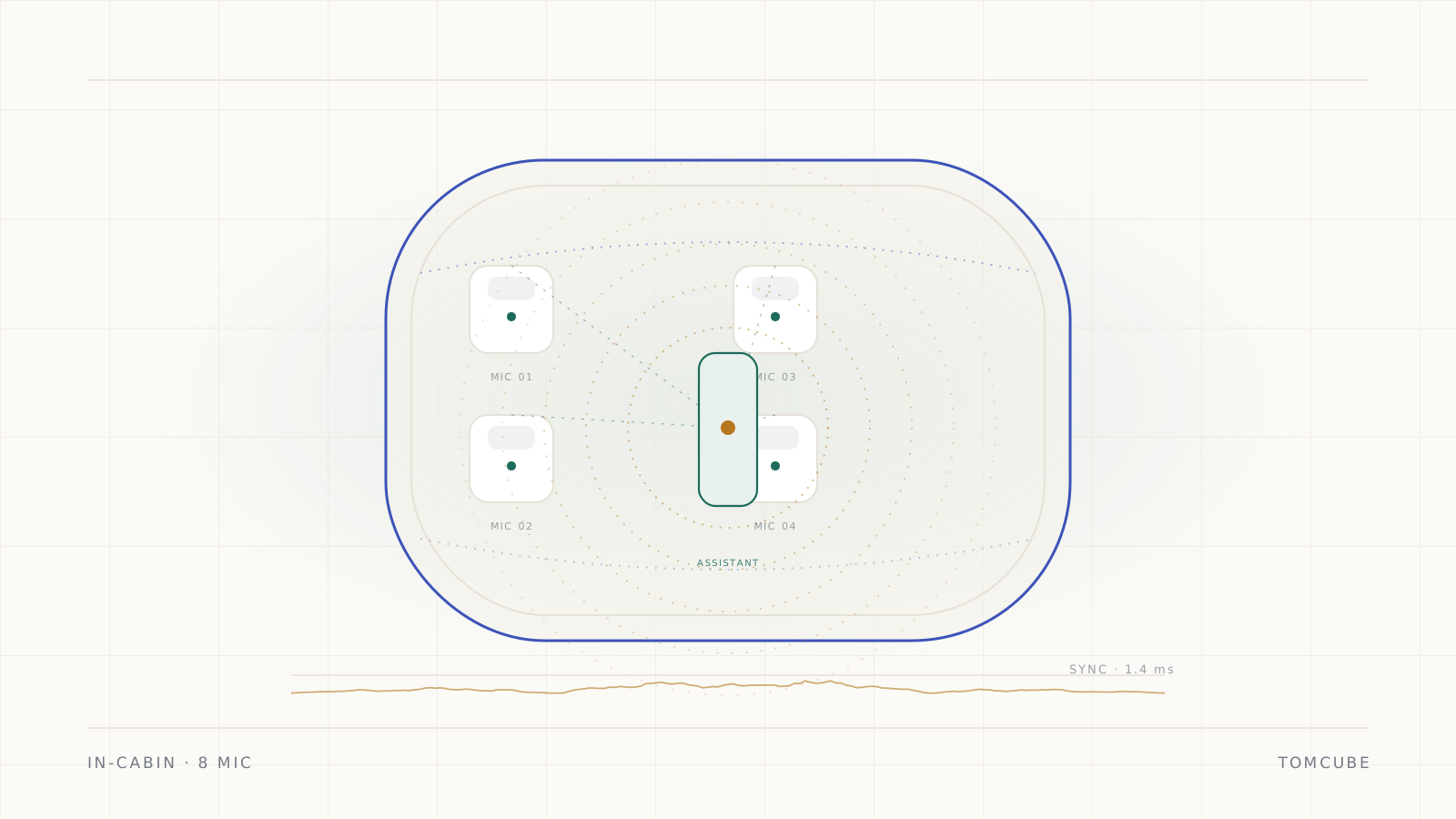
Low-disturbance setups and field notes for classrooms, clinics, homes and vehicle cabins.
Remote and crowdsourced capture
Remote collection across regions and languages, including device shipping and quality screening.
Recruitment and ethics
Recruit to inclusion and exclusion criteria, with consent, compensation and withdrawal handled up front.
On-site QC and backup
Per-session checks of channels, gain and sync markers, with raw files stored in two locations.
02 / Workflow
How it moves forward
Every stage has defined outputs and checkpoints, so progress and risk surface during the work rather than at acceptance.
- 01W1
Requirements and design
Fix the research question, variables and sample size, then select devices, venues and session scripts.
- 02W2–W3
Ethics and recruitment
Prepare consent and ethics materials, recruit to criteria and run a pilot with 3–5 participants.
- 03W4–W8
Collection
Execute to the SOP, complete QC for every session and write it into the collection log.
- 04W9
Handover and acceptance
Transfer raw data, logs and QC records as one package.
03 / Service notes
Who it is for, and how to begin
What we do
We turn a research question into an executable collection plan: fix the variables, settings, devices and sample size up front, design the time base for multi-stream synchronization, and leave a traceable record at every step of recruitment, consent and on-site execution. Audio, video, eye tracking, physiology, motion capture and transcription all run under one SOP, so no two batches end up looking alike while being impossible to merge.
Collection is not just pressing record. Three things matter more than the button: whether the signal is clean, whether the streams are aligned, and whether the result can be verified later. Before a session closes we complete channel checks, gain calibration, sync-marker validation and a personal-information inventory; raw files are written twice, with one copy held off-device, and the session log records what happened.
Remote collection deserves its own protocol. Participants receive a kit and record against a guided session script, and their files are screened for clipping, room tone and clock drift before anyone is scheduled or paid. Crowdsourced batches are checked for speaker diversity and device consistency, so a large volume of recordings does not quietly collapse into a narrow slice of the population.
We also collect in settings the lab cannot simulate. Classrooms, clinics, homes and vehicle cabins each impose their own constraints on microphones, camera positions, cabling and participant comfort. We rehearse the setup before the first recorded session and adjust it so the room still behaves the way it normally would.
Who it’s for
Teams that need first-hand multimodal corpora: linguistics and phonetics projects, psychology and human-factors experiments, classroom observation in education research, clinical consultation studies, and AI teams that need speech and interaction data from real settings. Projects that already hold data but collected it under inconsistent protocols can start by redesigning the collection specification and re-baselining what they have. If an earlier wave used a different microphone, firmware version or recruitment channel, we document the difference and define what can still be pooled. That decision is made with the research team, on evidence, rather than assumed at analysis time.
How it works
- Requirements and design. Clarify the research question, variables, sample size and statistical power; select devices, venues and session scripts.
- Ethics and recruitment. Prepare consent and ethics materials, recruit to the inclusion and exclusion criteria, and run a pilot with 3–5 participants.
- Collection. Execute to the SOP, complete quality control for every session, and write it into the log.
- Handover. Transfer raw data, logs, QC records and the protocol package together.
Delivery and verification
Deliverables include the collection plan and device list, recruitment and consent materials, synchronized raw multi-stream data, session logs and QC records. Every file carries naming conventions, channel descriptions and timecodes, so it can move straight into processing and validation without a second round of documentation. Sessions that fail on-site QC are flagged with a reason and rescheduled; they never enter the delivered dataset. Where a study needs it, we also provide a per-batch completeness matrix so you can see which cells of the design are already covered. The handover package is written to be opened by someone who was not in the field: file naming, channel maps, timecodes and a short readme explain how to load the data into ELAN, Praat or a Python pipeline.
How to get started
Send the research question, the target settings and an approximate sample size, and we will reply within one business day with a plan outline, timeline and budget range. If minors, patients or other vulnerable groups are involved, ethics sits on the critical path from day one, and we schedule around the review rather than after it.
04 / Deliverables
What you receive
Deliverables are organized to be citable and reproducible: naming, metadata and verification records are complete, ready for analysis or archiving.
Deliverable 01
Collection plan, variable list and equipment roster
Deliverable 02
Participant recruitment materials and consent documents
Deliverable 03
Synchronized multi-stream raw data and backups
Deliverable 04
Session logs, field notes and QC checklists
05 / FAQ
Common questions
If your question is not covered, contact us directly.
Can you collect inside schools, hospitals or homes?
Yes. We have on-site experience in universities, hospitals and home settings, and we work alongside institutional ethics review processes.
What if participants are hard to recruit?
We maintain participant pools by language, age, occupation and region, and can supplement through crowdsourcing channels. Recruitment progress and replacement rules are written into the plan.
How long does collection usually take?
Depending on setting, sample size and ethics approval, typically 4–12 weeks. Once the plan is confirmed we provide a week-by-week schedule and milestones.
When can we see the raw data?
Each batch is delivered with its raw data and session logs as soon as it is collected, so your team can review incrementally instead of waiting for the full study.
06 / Related datasets
Datasets delivered with this service
Public entries in the data catalog, useful as references for specifications, annotation and delivery formats.
Start a project
Start with a collection design conversation
Describe the research question, target settings and approximate sample size, and we will return an executable collection plan, timeline and budget range.
Reply within one business day · NDA and data licensing supported · Dedicated academic track