SOLUTIONS · Automotive and mobility
Smart cabins and in-vehicle voice
Multi-talker, high-noise, multi-zone speech and behavior data from real roads and simulated cabins, supporting in-cabin voice interaction and driver-state research.
Audience
Automakers / Tier 1 suppliers / voice vendors
- Related services
- 3 modules
- Related data
- 3 directions
- Median cross-stream sync error
- 1.4 ms
- Signals captured simultaneously
- 4 types
- Languages and dialects covered
- 38
- Batch QA pass rate
- 98.7%
01 / Challenges
Smart cabins and in-vehicle voice: the data problems we see
These problems rarely come from a single stage. They sit in the gaps between design, collection, annotation and verification.
Heavy noise and reverberation
Tire noise, wind noise, air conditioning and music stack up, and the same sentence sounds very different across speeds and window states.
Multiple zones and speakers
Driver, passenger and rear seats speak at once, so the system must separate zones and talkers, which general-purpose corpora rarely cover.
Scenes that cannot be replayed
Road conditions, weather and vehicle state cannot be reproduced reliably, so evaluation results are hard to compare across batches.
Confidentiality and joint acceptance
Unreleased models and interaction policies need strict confidentiality, and the acceptance criteria between OEM and supplier must be unified.
02 / Approach
How we move forward
Every project follows the same order: write the question and specification clearly, then move into collection, annotation and verification.
- 01
Scenario script design
Settle speed range, road type, air-conditioning level, occupant position and interaction tasks with the vehicle or voice team, then turn them into executable scripts.
- 02
Automotive-grade synchronized capture
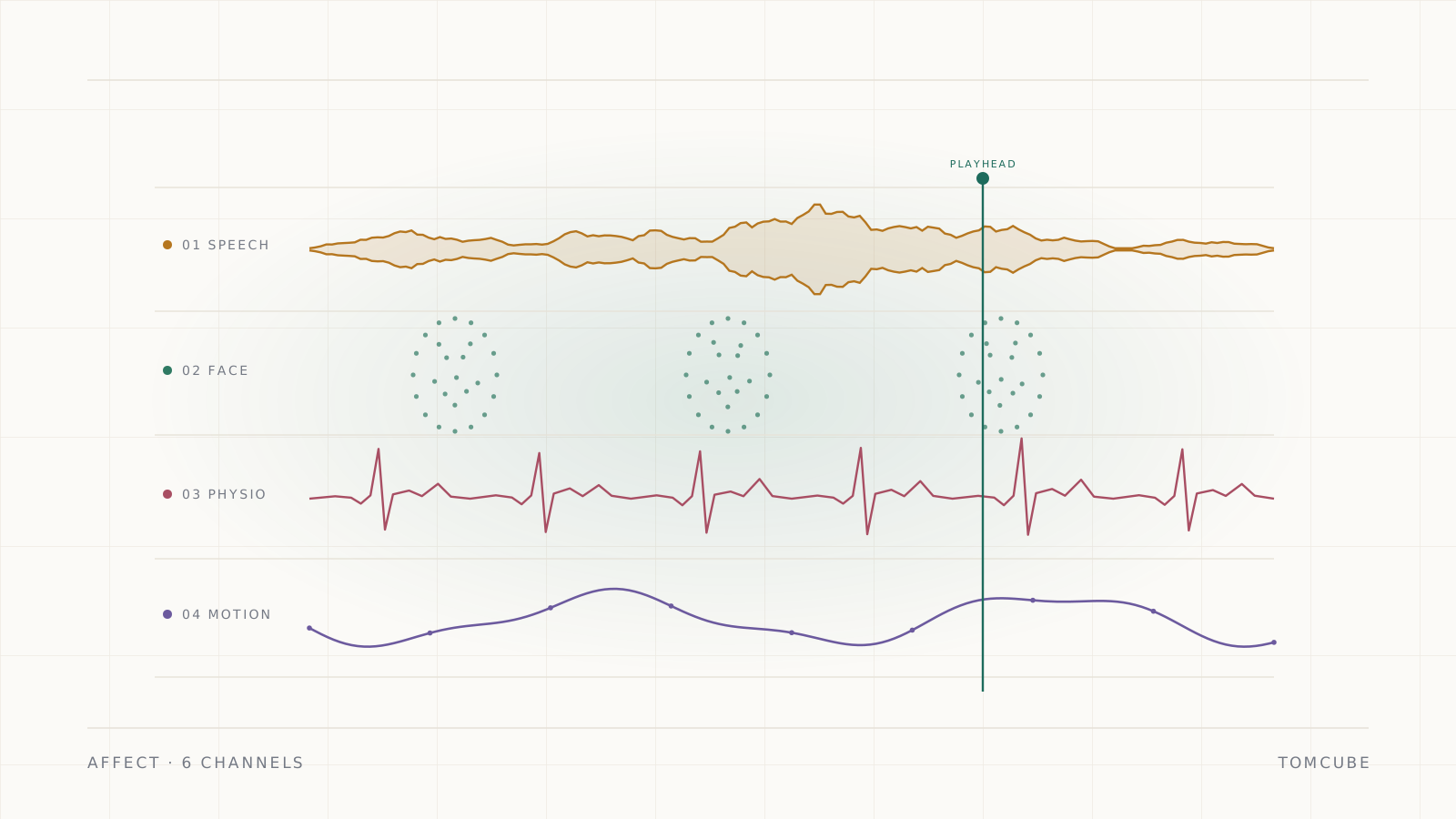
Audio, video, CAN signals and driver-state data share one time base, with environmental parameters recorded per scene.
- 03
Zone and noise annotation
Annotate by seat zone, noise type and wake-word result to build scene-segmented evaluation sets.
- 04
Confidential, isolated delivery
NDA, dedicated device management and data that stays in an isolated environment, with joint OEM-supplier acceptance supported.
03 / Delivery
What you will receive
- Synchronized multi-zone speech corpora inside and outside the cabin
- Cabin evaluation sets segmented by environmental condition
- Multimodal driver-state annotation data
- Traceable collection logs and QA reports
The cabin is one of the hardest language environments
In-vehicle speech has to contend with engine and tire noise, air-conditioning wind, several people talking, music playback and reverberation at the same time. The same sentence changes substantially in acoustic character across speeds, seat positions and window states. Data recorded only in a quiet lab can rarely cover how a production vehicle actually performs. Loudspeaker playback, HVAC fan speed and window position each change the transfer path, so a useful corpus records them as variables rather than as background.
Scenario scripts and synchronization
We first define the scenario script with the vehicle or voice team: speed ranges, road types, air-conditioning levels, occupant positions and interaction tasks. Both the instrumented vehicle and the simulated cabin execute the same script, and audio, video, CAN signals and driver-state data share one time base. Each scene is tagged with reproducible environmental parameters so evaluation sets can later be segmented by condition. Because a single script is used across vehicles, differences between runs can be attributed to the vehicle rather than to the recording setup, and results stay comparable across a supplier’s own builds.
Confidentiality and delivery
Automotive projects usually involve unreleased models and interaction policies, so they run as confidential projects by default: staff under NDA, dedicated device and material management, and data that stays inside an isolated environment. Deliverables include multi-zone speech, noise-scene annotation, wake-word and recognition evaluation sets, and traceable collection and QA reports, supporting joint acceptance between supplier and OEM. Equipment is registered and wiped between projects, and any material that leaves the isolated environment is reviewed and de-identified first.
For teams that iterate over the long term, scenario data can be topped up quarterly so evaluation sets stay in step with real driving conditions. We recommend fixing evaluation criteria early: which scenes enter wake-word testing, which support continuous speech recognition, and which are used for acoustic event detection. Once fixed, later collection can follow the same scripts and annotation rules, avoiding batches that cannot be compared. Where a project cannot share raw audio outside the vehicle, we can also deliver derived features and annotation instead of the recordings, and test reports are written so an engineering team can act on them without re-reading the collection notes.
04 / Cases
Illustrative cases
The cases below come from de-identified project settings and are used only to show how we collaborate and what delivery looks like.
Cabin wake-word evaluation
IllustrativeBuilt a wake-word evaluation set covering five noise conditions and three seating zones for an automaker, with per-scene baselines.
5 noise conditions
Highway noise recognition assessment
IllustrativeCollected multi-talker speech in highway and urban scenes for a Tier 1 supplier, used for recognition robustness assessment.
2 road scenarios
05 / Related capabilities
Services and data that go with it
A solution is usually delivered as a combination of services; related datasets can support evaluation, annotation or method verification directly.
Related datasets
Data catalog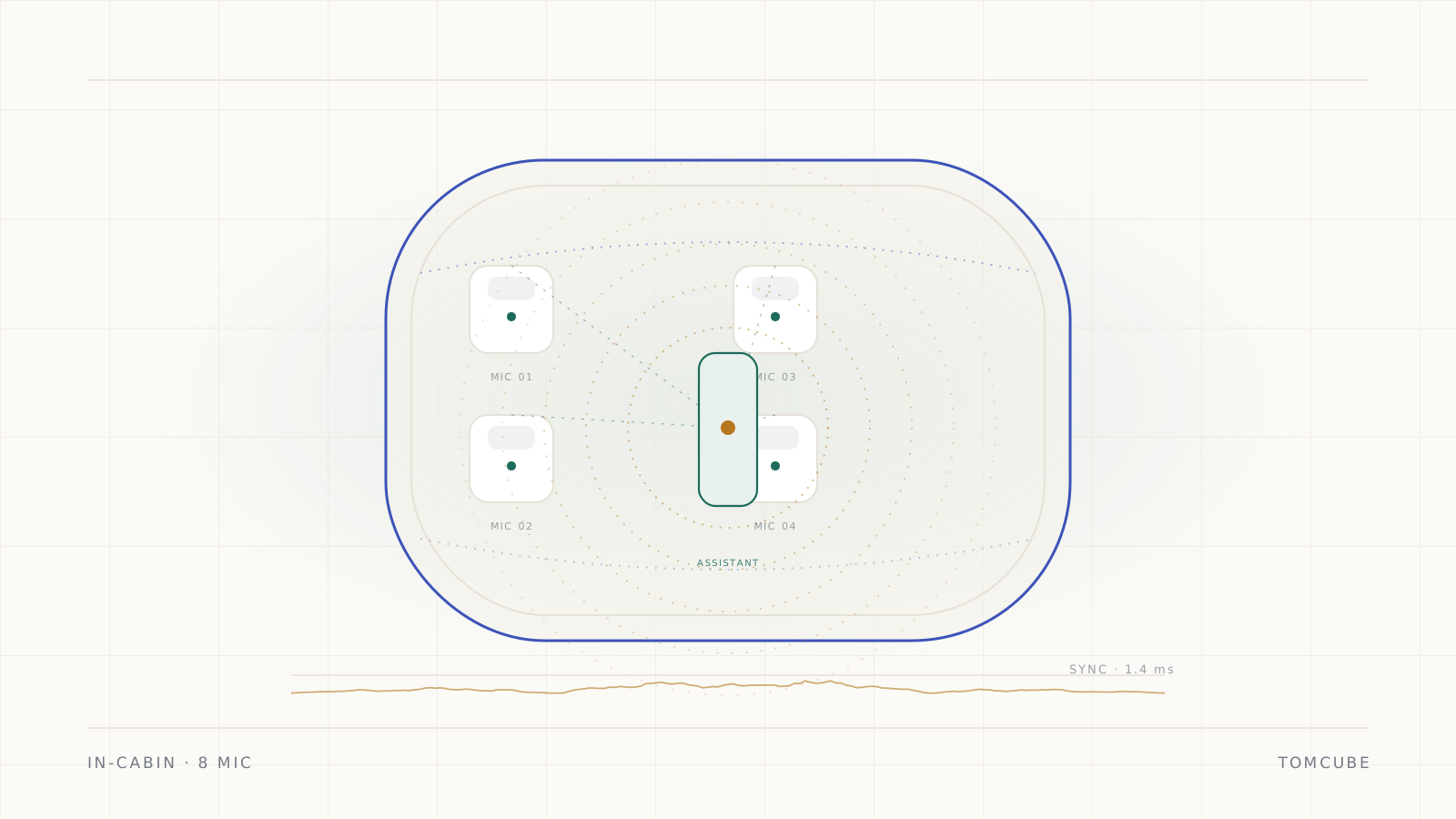
06 / FAQ
Common questions
Frequent questions about timeline, licensing and how we collaborate.
Can you use our prototype vehicles and test site?
Yes. We can build the collection plan around your vehicles and site conditions, and add a unified time-base sync module to the equipment.
Can data be delivered only to a named supplier?
Yes. Delivery recipients and use scope are agreed per project, and processing and acceptance can run in separate isolated environments when needed.
How does simulated cabin data differ from real-vehicle data?
Real vehicles have more authentic noise and more variables; a simulated cabin is reproducible and easier to control. The two are often combined, one to discover issues and the other to verify them.
Can batches be split by model or region?
Yes. Split by vehicle model, region or scenario script, with environmental parameters and a QA report per batch.
Start a project
Start with a data check-up
Tell us the question you need to answer, the data you already have and your time constraints. We will come back with an executable plan outline and budget range.
Reply within one business day · NDA and data licensing supported · Dedicated academic track