INSIGHTS
Children's speech data: ethical boundaries and engineering practice
Informed consent, voiceprint identifiability and de-identification for children's corpora, plus the engineering measures that make ethics operational.
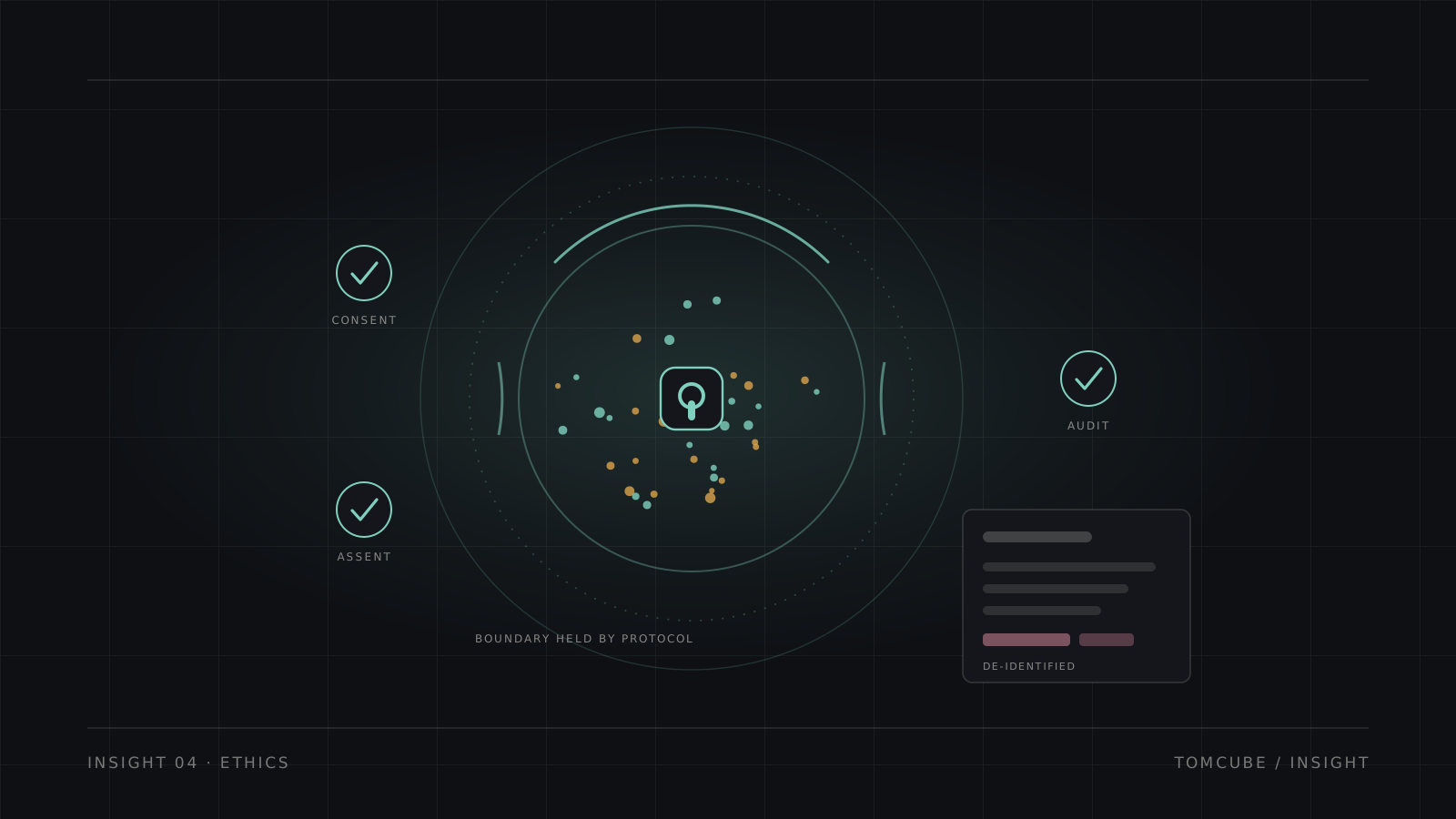
Research on children’s language development depends on real, natural, longitudinal recordings. Children’s voices change quickly with age, and the context is tightly tied to home and classroom, so researchers naturally want samples that are as continuous as possible. Yet children are also the group that data-protection frameworks treat with the most caution: they cannot complete consent on their own, their voices carry biometric information, and a leak can affect them well into adulthood.
Ethics is not a form at the end of a collection pipeline. It is an engineering constraint that enters at study design. This article outlines three risks specific to children’s speech data and the practices we use in our projects.
Three things that make children’s data different
The first is the developmental stage of consent. A preschool child cannot understand how long data will be stored or who will use it, but their willingness still deserves respect. The second is identifiability. Voices carry voiceprint characteristics, so even with names and faces removed, a natural conversation may still be recognized by someone who knows the child. The third is time: the value of children’s corpora often comes from longitudinal tracking, and the use cases ten years from now cannot be fully anticipated today.
These three points rule out simply reusing the workflow designed for adult corpora. Consent, de-identification and purpose limitation all need extra design. They also cannot be repaired after the study ends, only prevented up front, which is why we place ethics review at the design stage rather than a week before collection.
Consent is not a form
We split consent into three layers, each addressed to a different party:
- Guardian consent. Explain what will be recorded, how long it will be kept, how it will be used, who it will be shared with and how it can be withdrawn. Confirm each item individually rather than bundling everything into one signature.
- The child’s own assent. Explain in age-appropriate language: “We will record your voice to study how children talk.” Make clear that the child can stop at any time during the session.
- Institutional consent. For schools or hospitals, complete the institution’s ethics approval and data-management agreement before collection.
All three layers leave a record: signing time, the person who explained the process, the version number and the withdrawal channel. When a consent form is updated, existing recordings remain bound by the older version; usage is never expanded retroactively.
Withdrawal deserves its own procedure. If a family asks to withdraw, we locate every derivative of the affected recordings, remove them, and confirm in writing what was deleted. A withdrawal clause that cannot be executed is worse than no clause at all.
De-identification is hard because of voiceprints
Text corpora become much harder to identify once names and locations are removed. Audio does not behave the same way. A voiceprint is a biometric characteristic; simple pitch shifting or noise addition damages research value without reliably removing identifiability. Our strategy is layered:
- Keep the original audio, but only in a controlled environment with auditable access logs.
- Deliver an analysis copy with pitch and speaking-rate normalization, and with identifying context removed, such as names of family members or a precise address.
- For high-risk segments, such as self-descriptions containing identifying details, trim the content or provide only the transcript and feature files.
We also write identifiability assessment into the QA checklist: a team member who did not take part in collection listens to the delivery copy and judges whether the speaker could be identified. That judgement is one of the release conditions.
It is also worth stating what de-identification cannot do. Any voice-based dataset carries residual re-identification risk, especially for speakers who are public figures or whose speech is distinctive. The honest approach is to document that risk and constrain access accordingly, not to claim the data are anonymous.
Engineering checklist
Ethical requirements become real only when they are built into the workflow. The table below shows the control points we use.
| Stage | Measure | Record |
|---|---|---|
| Study design | Minimize collection scope; state purpose and retention | Data management plan |
| Recruitment | Layered consent forms; age-appropriate materials | Consent IDs and versions |
| Collection | Allow pausing at any time; avoid long continuous sessions | Capture log, pause records |
| Processing | Voiceprint risk assessment; content trimming | De-identification record |
| Storage | Encrypted storage, tiered permissions, access logs | Access audit trail |
| Sharing | Purpose-bound authorization; no re-identification attempts | Licensing agreement |
| Deletion | Delete at expiry and issue a destruction certificate | Destruction record |
Review process and red lines
Before a project starts, ethics review checks four things: whether the consent process covers all three layers, whether the collection scope is genuinely minimized, whether the de-identification plan has been validated by listening, and whether sharing and deletion have named owners. If any item fails, the project does not begin collection.
We also hold a set of non-negotiable red lines: do not record family privacy unrelated to language research; do not use children’s corpora for commercial purposes not listed in the consent form; do not skip guardian consent on the grounds of research necessity; and do not publish identifiable audio or video of children.
Closing
The ethical boundary around children’s data is not the opposite of research efficiency. Careful consent, solid de-identification and clearly stated purposes let researchers and participants proceed with more confidence in longitudinal work. For TOMCUBE, this work does not show up in corpus size, but it determines whether the data can be used responsibly for the next ten years.
TOMCUBE
The TOMCUBE research team designs collection standards, annotation schemes and verification reports, and turns first-hand project experience into public method notes and benchmarks.
Related
Keep reading
More method notes on adjacent topics.
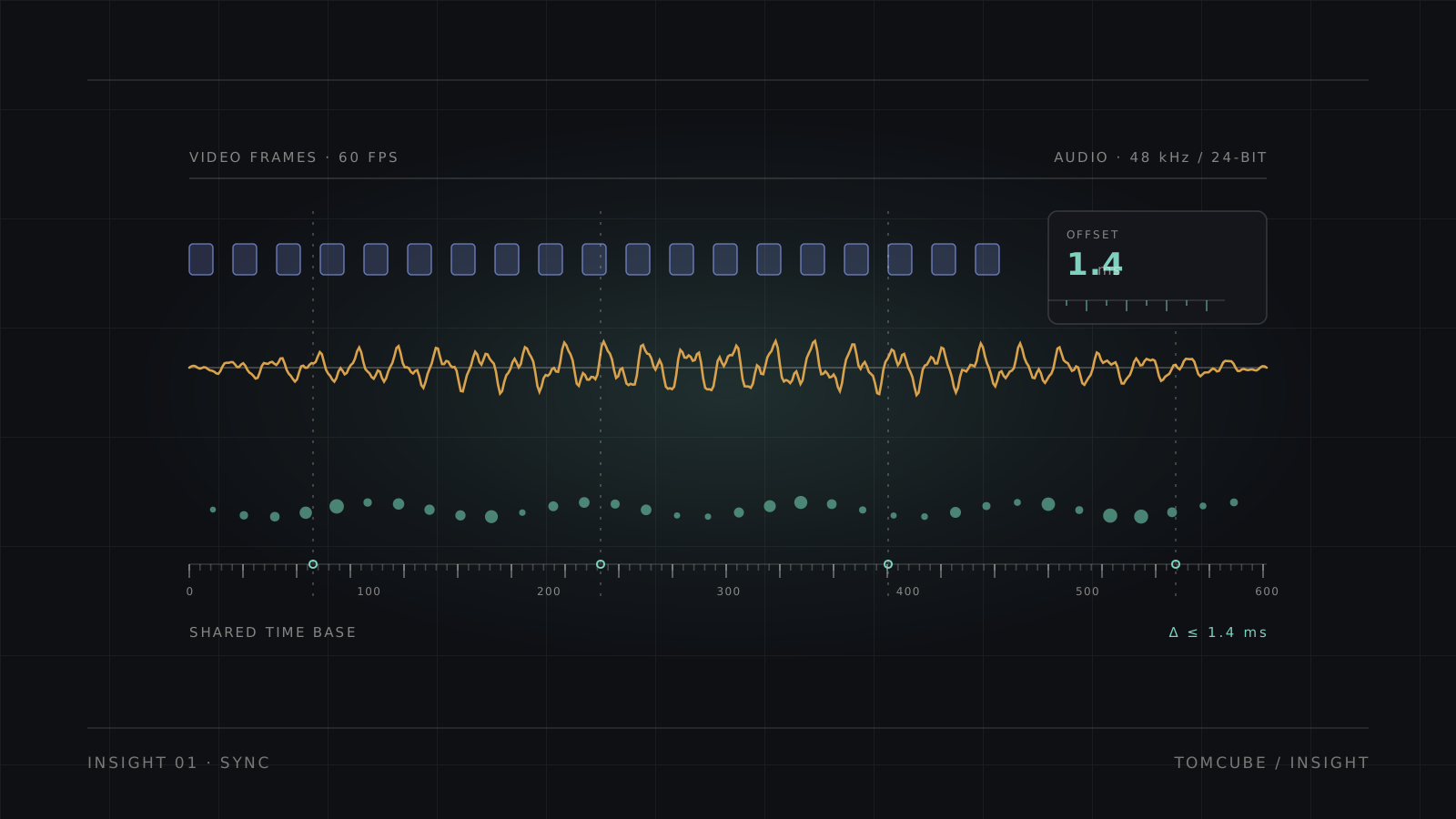
Synchronization precision: the first quality line multimodal corpora overlook
What a 1.4 ms sync error actually means, where it comes from, how to measure it, and what an auditable synchronization report should contain.
Read article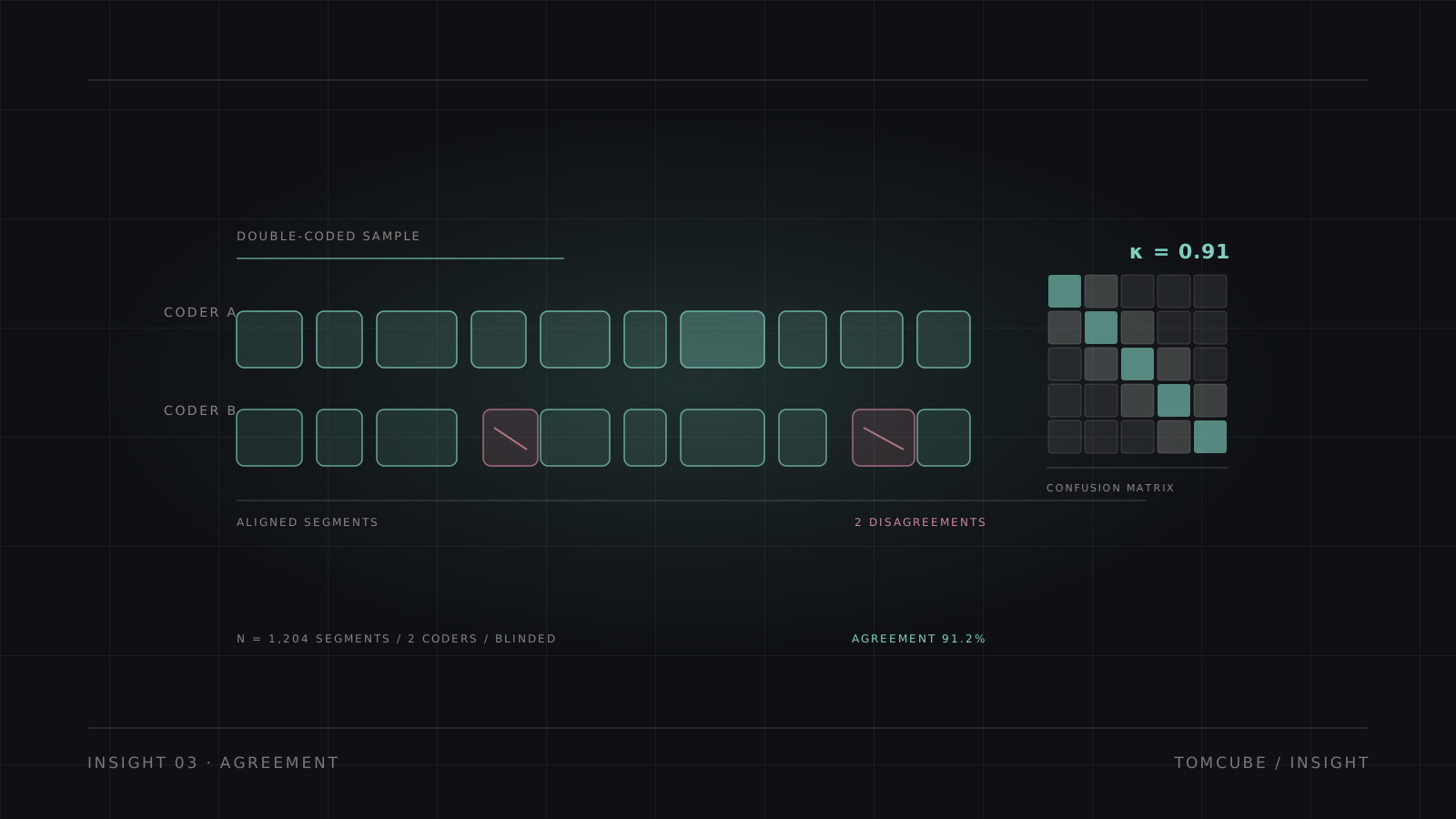
Annotation agreement: when κ = 0.8 is not enough
What a median of κ = 0.91 hides, when agreement coefficients mislead, and how stratified reporting replaces a single number.
Read article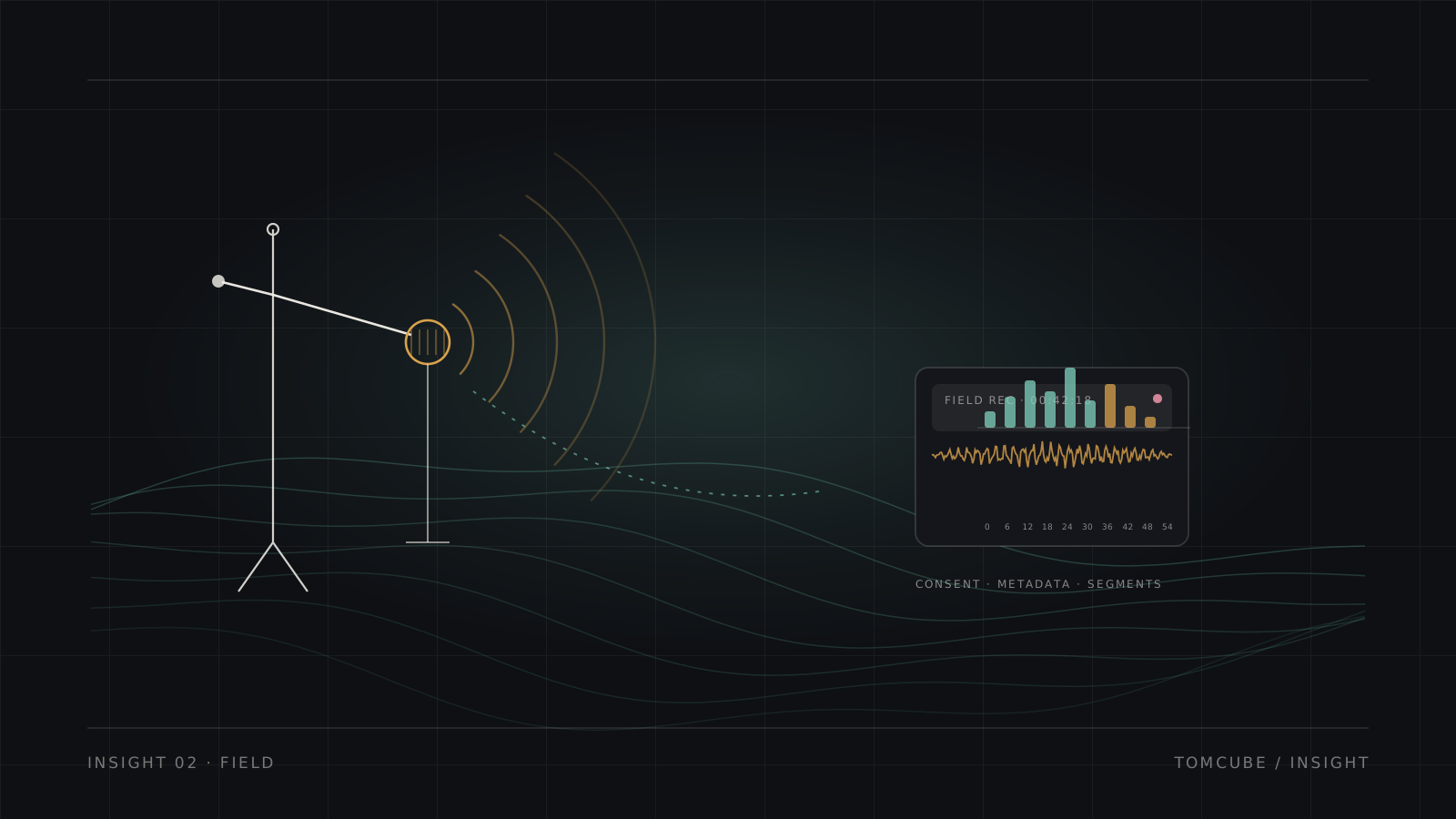
From recorder to corpus: a complete field collection workflow
From research questions and on-site execution to transcription, alignment and ingest: a full walkthrough of a dialect field collection and the traps along the way.
Read articleResearch partnership
Turn your data questions into a verifiable design
If you are planning multimodal collection, annotation or validation, we can help you turn the research question into an executable protocol and a QA plan.
Reply within one business day · NDA and data licensing supported · Dedicated academic track