INSIGHTS
From recorder to corpus: a complete field collection workflow
From research questions and on-site execution to transcription, alignment and ingest: a full walkthrough of a dialect field collection and the traps along the way.
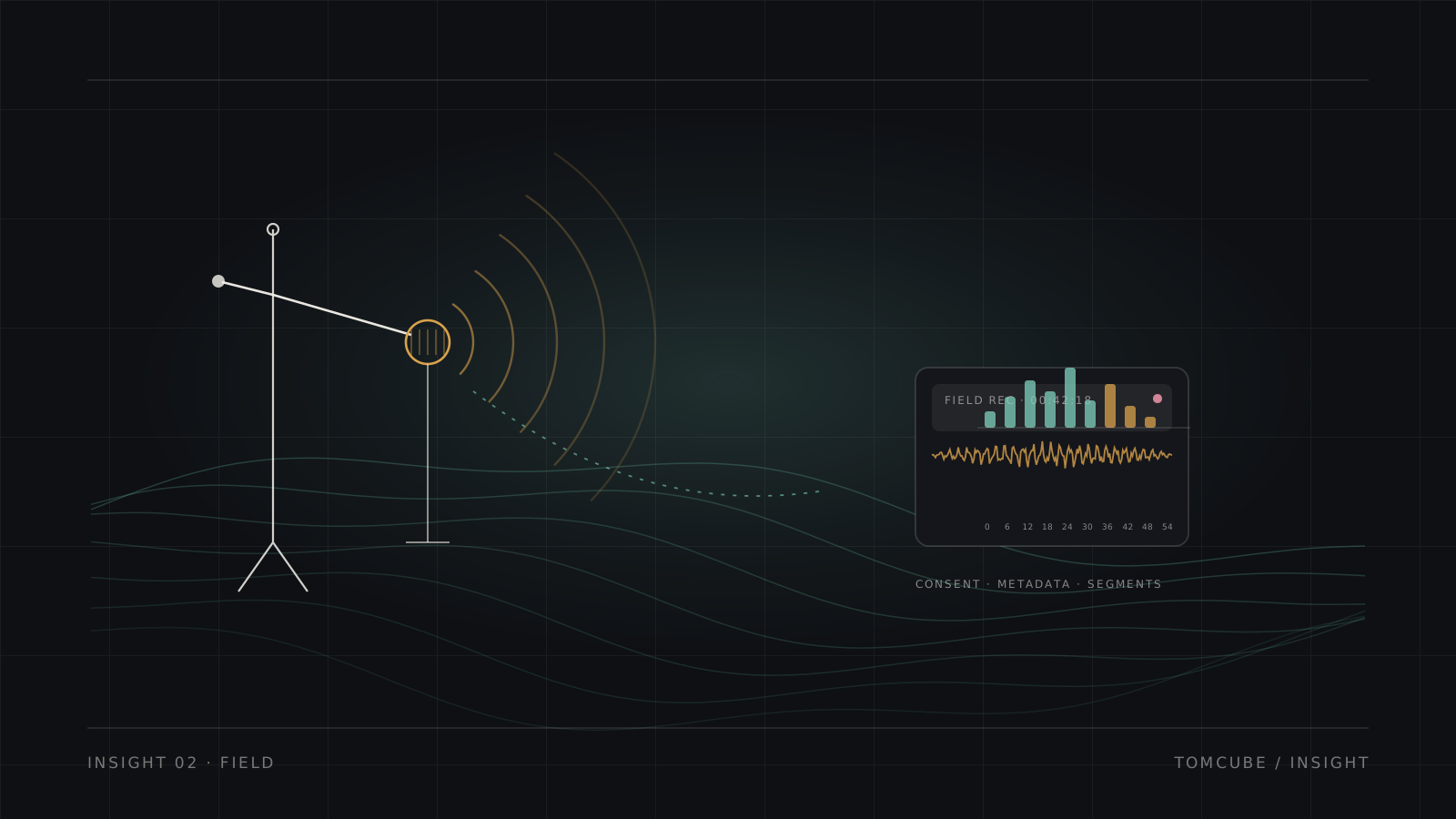
In a laboratory you can control noise, lighting and camera position. In the field you cannot. A dialect site often means a living room, an ancestral hall or a village committee meeting room, with equipment that must be set up within an hour and speakers who may only be available once. The real difficulty of field collection is not pressing record. It is leaving enough of a record that the material can later be reproduced, audited and reused.
This article follows one nine-day collection covering three dialect sites and 260 hours of material, from preparation to corpus ingest.
Before departure: turn research questions into a collection checklist
The most common rework in field collection comes from discovering a missing variable after the recording is finished. The first task before departure is to translate the research question into an executable checklist: which age groups and genders the speakers must cover, how much read speech and spontaneous conversation each person needs, which scenes must be recorded on site, and which can be completed on a return visit.
We normally fix four material types: controlled word-list reading, picture description, semi-structured interviews and spontaneous conversation. The first two guarantee comparability across speakers; the last two provide natural distributions of prosody and turn-taking. Each type also gets a minimum duration, so that nobody decides on site that a session is “probably long enough”.
The equipment list is fixed in the same way: primary and backup recorders, directional and omnidirectional microphones, camera positions and fill light, a synchronization time base, spare batteries and storage cards. Every device goes through a full rehearsal before departure, and firmware versions are recorded.
Where the site allows it, a short scouting visit pays for itself: it reveals the room acoustics, the power supply and whether the planned camera positions are physically possible. If a visit is not possible, we ask the local partner for photographs and a rough floor plan, then plan the equipment list around them.
A day on site
Field time is usually fragmented by daily routines and speaker availability, so the schedule must be compact and interruptible. This is the template we use.
| Time | Activity | Recorded items |
|---|---|---|
| 07:30 | Room setup, noise measurement, camera and light positions | Environment photos, noise floor |
| 08:30 | Device sync rehearsal and signal check | Hand clap and flash anchors |
| 09:00 | Consent briefing and signing | Consent ID, signing time |
| 09:30 | Controlled reading and picture description | Task ID, speaker code |
| 11:00 | Semi-structured interview | Topic-list completion |
| 14:00 | Spontaneous conversation (pairs, groups) | Participant relationships, scene notes |
| 16:30 | Dual backup and checksum verification | Checksums, backup locations |
| 17:00 | Gap filling and next-day plan | Missing-item list |
Site notes matter as much as the audio. Speaker code, age band, dialect site, education background and recording environment should be written into the capture log the same day, not recalled weeks later. A missing log is the hardest loss to repair in corpus construction.
From raw recordings to a structured corpus
Back in processing, field material passes through four steps before it becomes usable. The first is integrity checking: verify duration, sample rate and checksum for every file and remove damaged segments. The second is segmentation and transcription, with verbatim text that keeps pauses, repetitions and fillers. The third is alignment, using forced alignment to attach word-level time stamps. The fourth is annotation, adding prosodic, phonological or affective labels as the project requires.
Forced alignment depends heavily on recording quality. Field material often carries environmental noise and distant microphone placement, so denoising and speech enhancement come first. The enhanced audio is a processing artifact, however, and never replaces the original file in the corpus.
Every processed file also carries a link back to its source: the original recording ID, the segment boundaries and the processing log. That link is what allows a reviewer to replay any decision months later.
Three stop lines in QA
Before delivery we apply three stop lines. If any one fails, the whole batch goes back to processing:
- Sync failure rate: the share of checked segments above 2 ms error is higher than 0.5%.
- Transcription error rate: character error rate in a random 5% spot check is above 3%.
- Metadata completeness: records missing speaker information, task IDs or scene descriptions exceed 1%.
The point of these lines is not zero defects. It is to make defects quantified, recorded and confined to an acceptable range.
We also run a short listening audit alongside the numbers: ten randomly selected segments are reviewed by a team member who was not involved in collection. Metrics catch systematic errors; listening catches things only ears notice, such as a transcript that drifts away from the audio or a speaker label attached to the wrong person.
Consent and the ethics chain
The other half of field work is authorization. Every speaker should understand how the recording will be used, how long it will be kept, who can access it and how consent can be withdrawn, and should sign an informed consent form. For material that reflects on a dialect community as a whole, we also confirm usage boundaries with local partners. Only when the authorization chain is complete can a corpus enter a shareable data catalog.
Closing: reproducibility comes from records
The value of a field collection depends on whether another research team can understand and reuse it. That does not come from expensive equipment. It comes from turning the research question into a checklist, the site into a log, and processing into traceable steps. The 260 hours of material became a citable corpus precisely because of records that look trivial while they are being written.
TOMCUBE
The TOMCUBE research team designs collection standards, annotation schemes and verification reports, and turns first-hand project experience into public method notes and benchmarks.
Related
Keep reading
More method notes on adjacent topics.
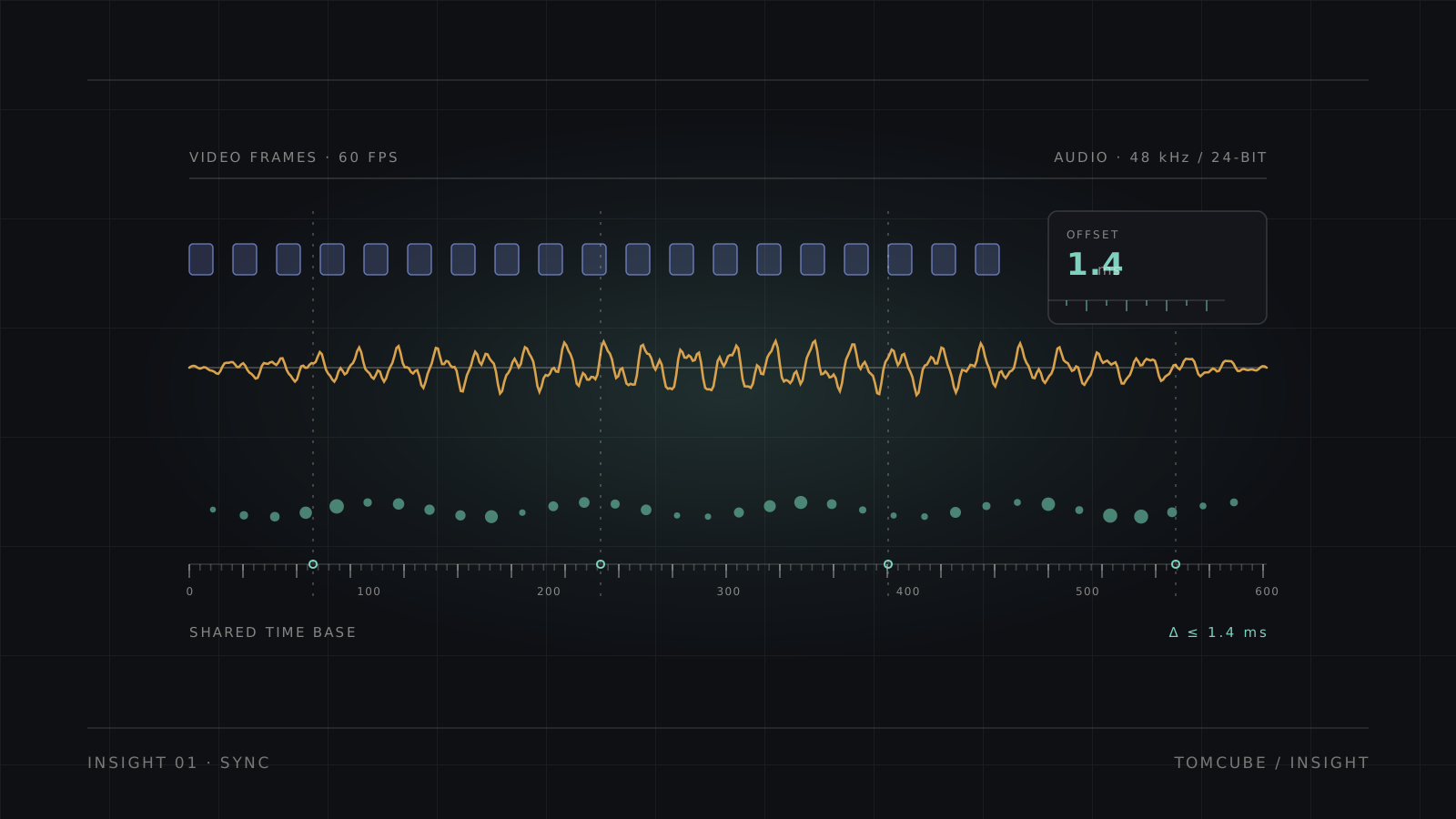
Synchronization precision: the first quality line multimodal corpora overlook
What a 1.4 ms sync error actually means, where it comes from, how to measure it, and what an auditable synchronization report should contain.
Read article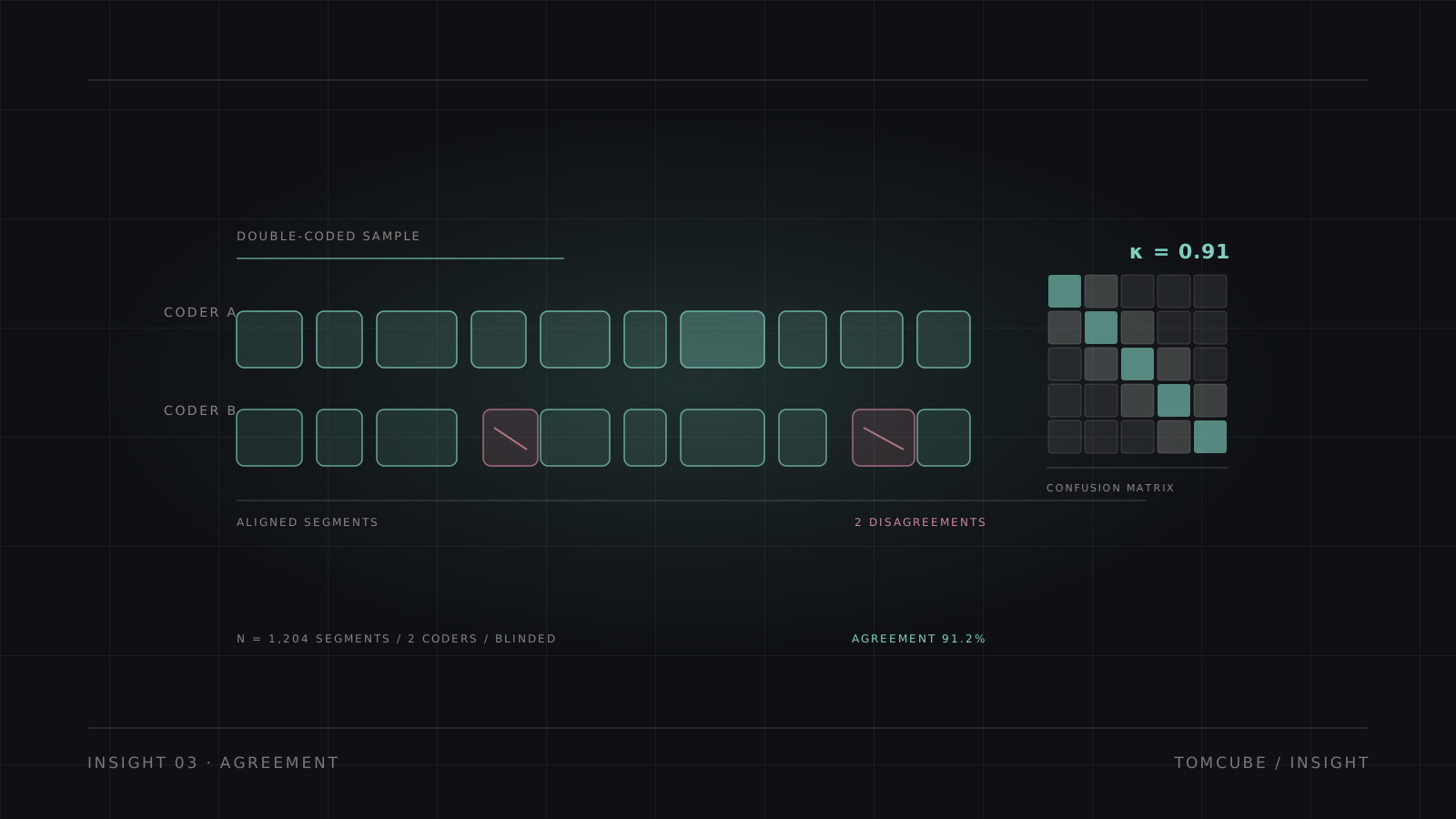
Annotation agreement: when κ = 0.8 is not enough
What a median of κ = 0.91 hides, when agreement coefficients mislead, and how stratified reporting replaces a single number.
Read article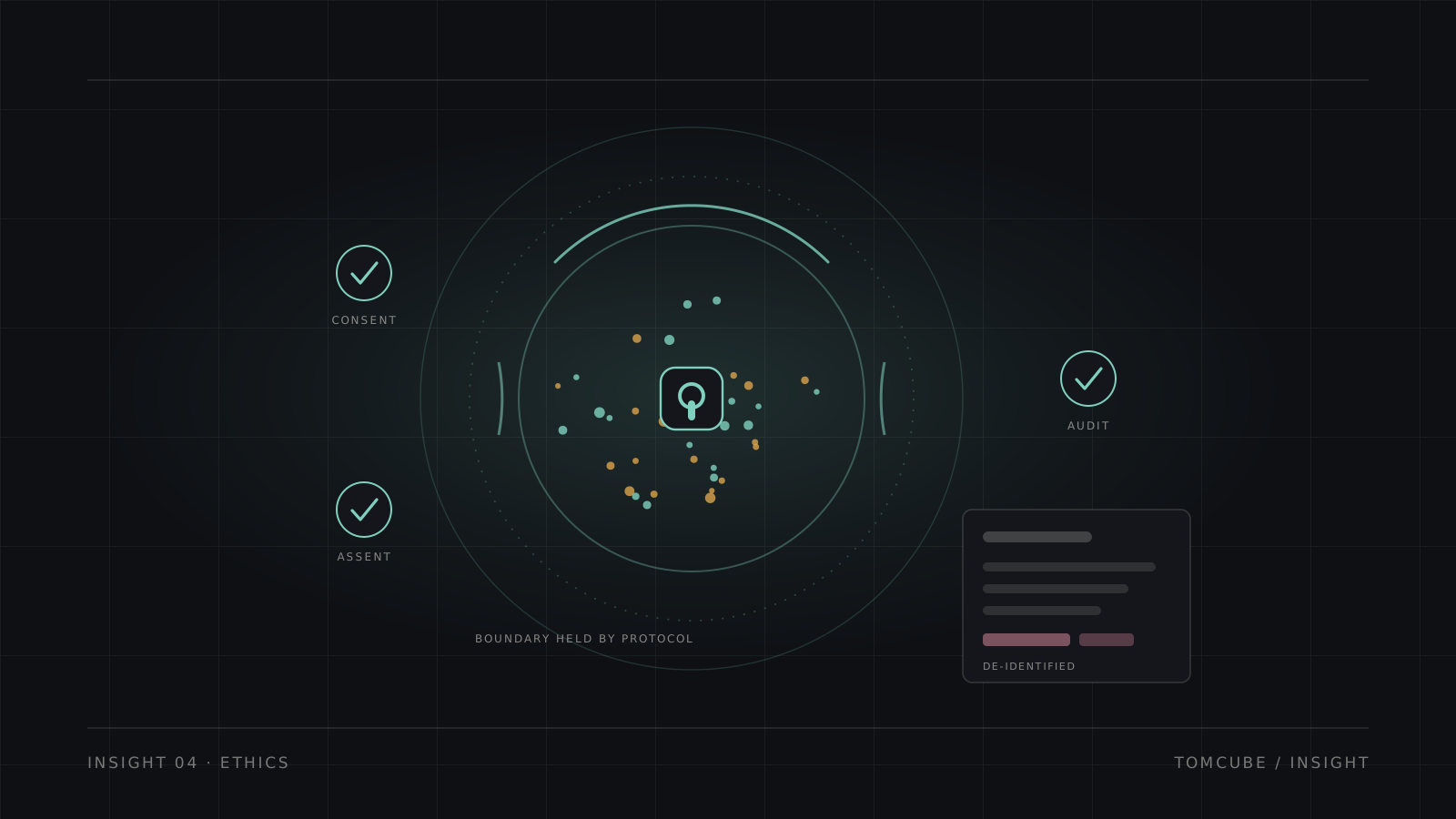
Children's speech data: ethical boundaries and engineering practice
Informed consent, voiceprint identifiability and de-identification for children's corpora, plus the engineering measures that make ethics operational.
Read articleResearch partnership
Turn your data questions into a verifiable design
If you are planning multimodal collection, annotation or validation, we can help you turn the research question into an executable protocol and a QA plan.
Reply within one business day · NDA and data licensing supported · Dedicated academic track